Exploring Art and Creativity with AI
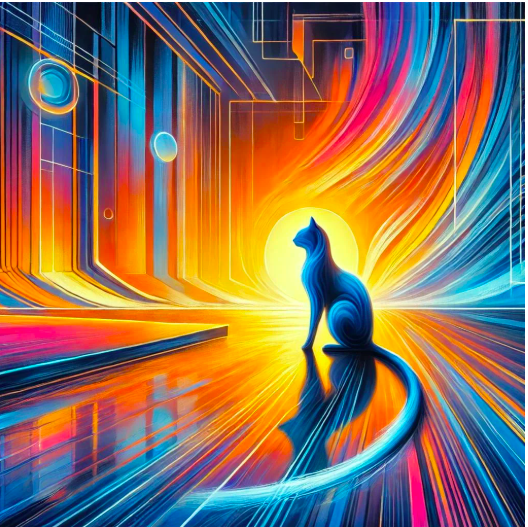
Art and creativity with AI came together in an unexpected way during one of my reading classes. We were working on an article about art, and I started the lesson with a few warm-up questions: What is art? What do you think about art? The students had some interesting ideas, and their answers set the stage for what turned out to be a really creative session.
We moved on to a picture in the book, and I asked the students to analyze it. Their responses were so varied! Some talked about the colors, others thought the image had some kind of filter. One student wasn’t impressed and said, “It’s just slices of oranges.” Then someone suggested that it might have been generated by ChatGPT!
That comment sparked an idea. I told them the image didn’t look like what DALL-E (an AI art tool) would produce, but we could use the tool to create something ourselves. The class liked the idea. We decided to come up with a description for DALL-E together.
I assigned one of the students as the secretary to jot down our sentences. I started to be a model for my students and said the picture should have bright colours. Another student said the image should look futuristic. Someone else suggested adding a cat, and another said there could be the sea. Piece by piece, we built our prompt.
When we entered it into DALL-E, the result was amazing. The image captured everything we had described, and the students loved it. We spent some time analyzing the final product, comparing it to what we imagined, and reflecting on how AI interpreted our ideas.
It was such a fun and unexpected way to connect with the topic of the lesson. The students were engaged, creative, and curious. It was also a way to demonstrate students how to benefit from AI and show.
Why Art and Creativity with AI Works in the Classroom
This kind of activity works so well because it combines several skills at once. Students are reading, discussing, describing, and collaborating — all while learning how to interact with an AI tool in a purposeful way. The prompt-building stage is particularly valuable: students have to think carefully about vocabulary, adjectives, and how to express visual ideas in words. That is a surprisingly rich language task.
It also opens up a natural conversation about what AI can and cannot do. When the image appeared on the screen, students immediately started comparing it to their mental image. Was it what they expected? What did the AI get right? What did it miss? These are exactly the kinds of critical thinking questions we want learners to engage with.
Art and creativity with AI does not require a lot of preparation. All you need is a reading or discussion topic, a free AI image generator, and a class willing to experiment. I would suggest trying it with B1 level and above — students need enough vocabulary to build a meaningful prompt together.
It is definitely an activity I will keep returning to.
If you enjoyed this activity, you might also like Can AI See What You See? and Creating ELT Games with Claude.
💡 Want practical lesson plans, ready-to-use classroom materials, and AI tips delivered straight to your inbox every week? Join my free newsletter below:

3 Comments