
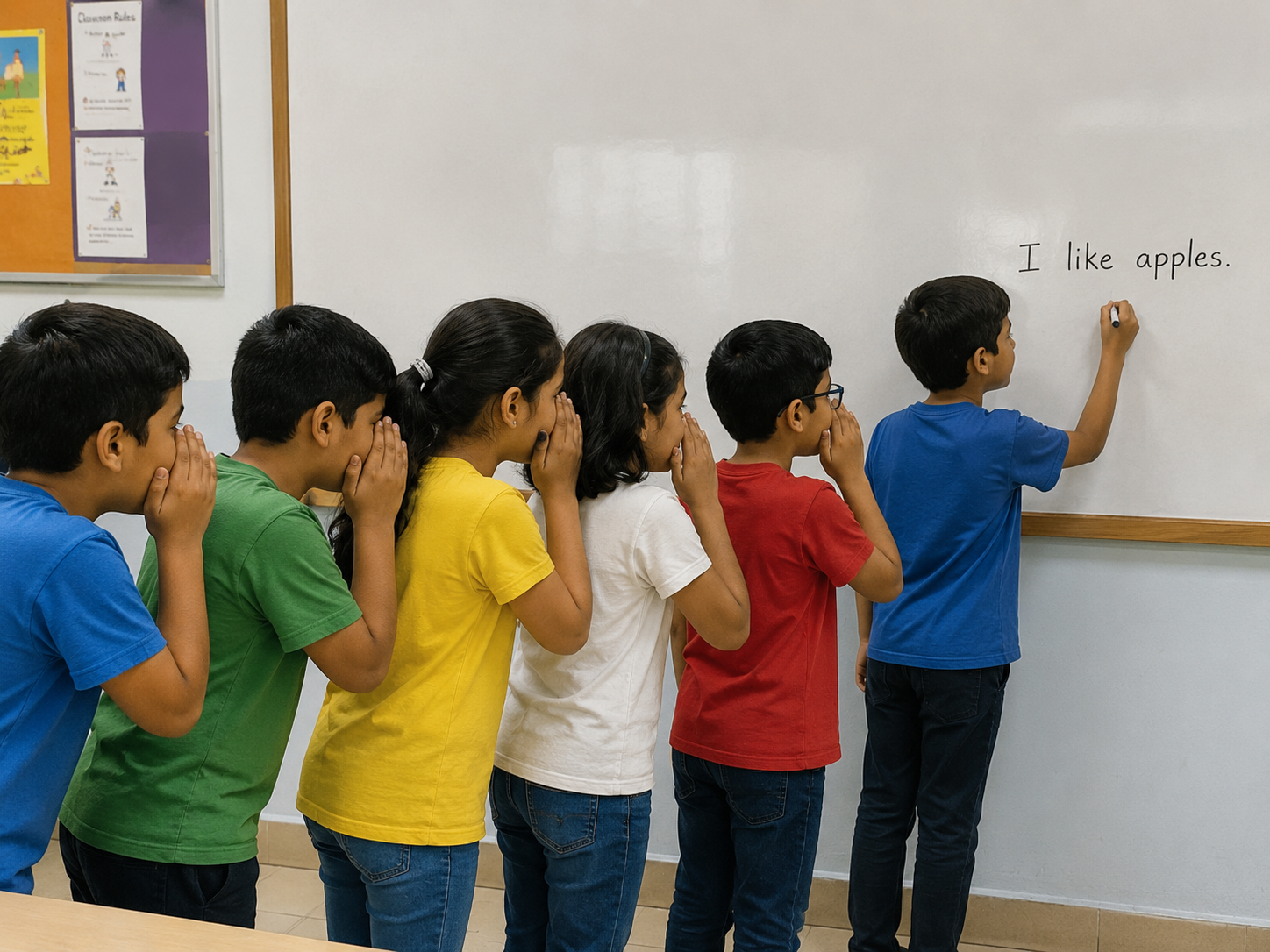
One Fun Activity: Chinese Whisper Dictation
Or Chinese Whisper Sentences:
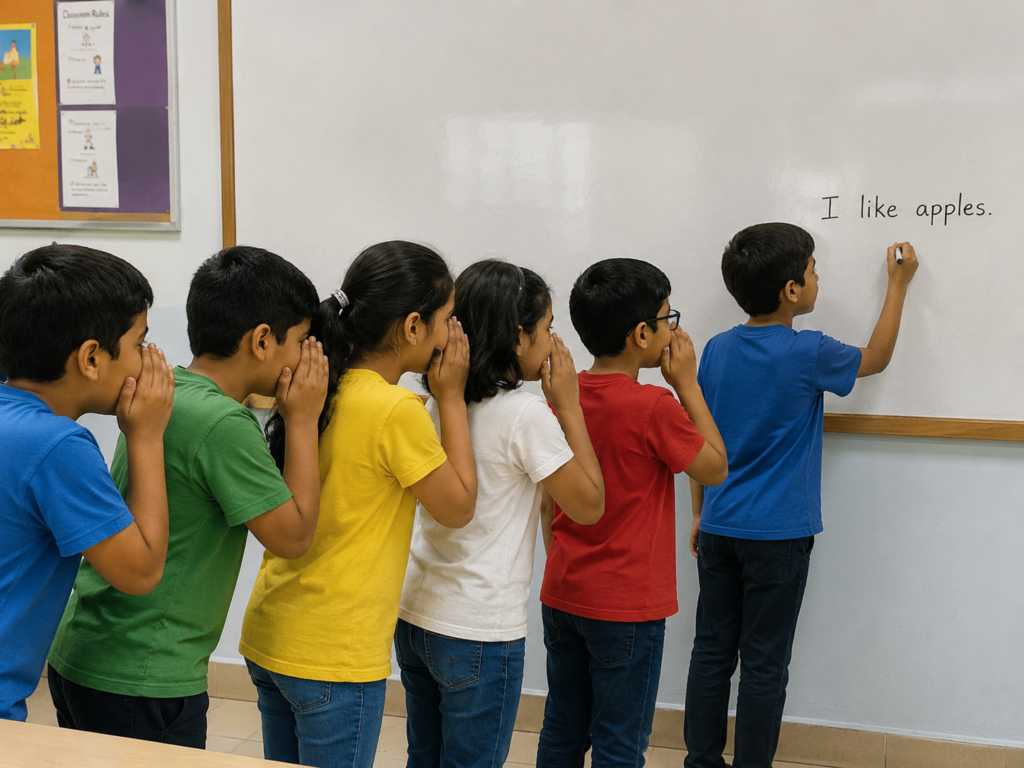
How to Run a Chinese Whisper Dictation
I have to admit something. For years, I was not a fan of dictation.
The word alone brought back a very specific memory: sitting in primary school, trying to memorise long texts at home, then writing them out from memory in class while the teacher read aloud at a speed that felt designed to catch us out. It was mechanical, stressful, and the only skill it seemed to test was spelling under pressure.
So when I started teaching, I quietly left dictation out of my lessons. There were better things to do.
Then I started exploring what dictation could actually look like — and I realised I had been avoiding something genuinely useful because of one bad experience.
Why Chinese Whisper Dictation Deserves a Second Look
Dictation is not just a spelling test. When it is done well, it is a listening activity, a grammar activity, a vocabulary activity, and a speaking activity all at once. Students have to hold a sentence in their heads, process its meaning, and then reproduce it accurately. That is a lot of cognitive work happening at the same time.
It is also one of those rare activities that works across levels. You adjust the text, the speed, and the support you provide — and the same format works for A1 learners and B2 learners in entirely different ways.
And honestly? Students tend to enjoy it. There is something satisfying about getting a sentence right, especially when there is a physical or competitive element involved.
Dictation Types Worth Knowing
If you want to explore dictation more broadly, I wrote about several variations in an earlier post — Old Techniques Revisited — including mixed ability dictations, running dictations, and the wonderfully chaotic cheating dictation. You will also find dictation listed among my favourite games, fillers and warm-ups, and I have used the wall dictation version for motivational quotes in the way I described in this post.
Chinese Whisper Dictation sits somewhere between a game and a dictation. It is movement-based, social, and slightly unpredictable — which is exactly what makes it work.
How It Chinese Whisper Dictation Works
- Divide the class into two groups.
- Ask each group to stand in a row facing the board.
- Write a short sentence on a slip of paper and give it to the student at the back of each row.
- That student whispers the sentence to the person in front of them, who whispers it to the next, and so on.
- The student at the front writes what they heard on the board.
- Check together — then the student at the front moves to the back, and a new sentence begins.
The longer the row, the more the sentence tends to transform. That is part of the fun, and also a genuine teaching moment: what changed, why, and what does that tell us about how we listen?
What to Use It For
This format works well for practising target vocabulary in context, revising grammar structures, or simply getting students moving in the middle of a lesson. Keep the sentences short and connected to whatever the class has been working on. The activity loses its value if the sentences are random and unrelated to the lesson.
For lower levels, you can write the sentences on the slips in larger font and allow students to look again if they need to. For higher levels, you can increase the length and complexity of the sentences, or even ask students to write their own for the next round.
Have you tried Chinese Whisper Dictation in your classes? I would love to know how it went — and whether the sentences survived the journey to the board.
If you want to read more about why dictation works and how it supports all four skills, the British Council has a thorough overview here.
💡 Want practical lesson plans, ready-to-use classroom materials, and AI tips delivered straight to your inbox every week? Join my free newsletter below:



i am parphula choudhary iam studying in ade colege mithi moderation mean iam trainer of primary teacher