
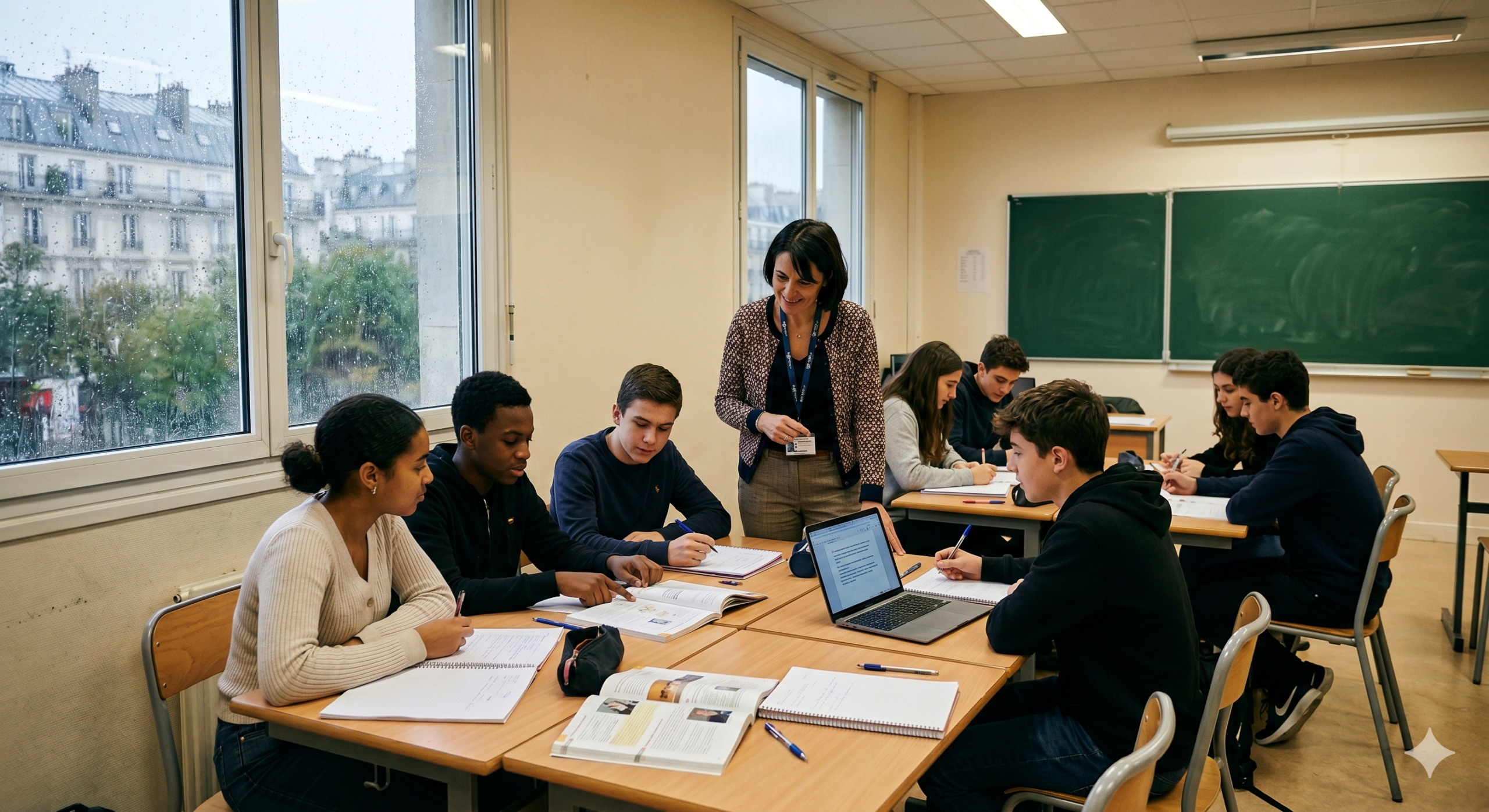
Setting Group Work in EFL Classroom
Using Birth Order and Personality Adjectives in Group Work
One of my favourite group work in EFL activities has always been getting students moving and talking at the same time. Years ago, I shared an activity on my blog called Get into groups according to… and it was always a hit because it got students reflecting on themselves while practising language naturally.
This week, our course flow included personality adjectives, so I decided to adapt that activity for my A2 Reading class. With ChatGPT’s help, it was much easier to bring it to life again. I listed the adjectives I wanted to focus on and asked ChatGPT to write a 300-word text about birth order personalities — first-borns, middle children, youngest, and only children. The result was a short, level-appropriate reading passage with the target adjectives.
Here’s how I planned and staged the lesson:
Step 1 — Group Formation
I first asked students to form groups according to their birth order:
First-borns together
Middle children together
Youngest children together
Only children together
Step 2 — Adjective Reflection
Each group read the paragraph about their birth order and highlighted the adjectives used (e.g., reliable, confident, sensible for first-borns).
Then they discussed:
Which adjectives really describe you?
Which ones don’t? Why not?
Can you give an example that shows one of these traits in your life?
We practiced useful language for self-reflection, like:
“I think I’m reliable because I always finish my work on time.”
“I’m not very confident; I get nervous before presentations.”
Step 3 — Agreement & Disagreement
Groups then made two short lists:
Adjectives we agree with
Adjectives we disagree with
They summarised their opinion in two or three sentences:
“As first-borns, we agree that we are reliable and confident, but we don’t think we are selfish.”
Step 4 — Class Report
To wrap up, we completed a simple chart on the board showing:
| Birth Order | Adjectives that fit | Adjectives that don’t fit |
|---|
Optional Step — Comparison
If there’s time, students can also comment on other groups’ results:
“We’re youngest children, and we think first-borns are too serious sometimes!”
As it was a multi-step task, I clearly instructed each stage, wrote them on a Word document, and also presented them on the whiteboard to support students visually.
The reading text I used is added under this post, but you can also ask an AI tool to generate a similar text that best suits your own learners’ level and needs.
This simple activity worked well to combine reading, vocabulary, and speaking practice. Students enjoyed discovering how their personalities “fit” (or didn’t fit!) the descriptions, and the conversation naturally flowed.
Birth Order and Personality
Many psychologists believe that the order in which you are born — first, middle, last, or only child — can influence your personality. Of course, this isn’t always true for everyone, but it can help explain why brothers and sisters sometimes act so differently.
First-born children are often described as reliable, sensible, and confident. Parents usually give them a lot of attention and expect them to set a good example. Because of this, they learn to be responsible and organized from a young age. They like to make plans and complete tasks properly. However, some first-borns can also be a bit difficult or selfish, especially when they feel that others don’t listen to them.
Middle children often try to keep peace in the family. They are usually friendly, patient, and good at understanding other people’s feelings. Many are great listeners and try to be kind to everyone. However, they sometimes feel invisible or think they are not special. Being in the middle can make them both sensible and flexible, as they learn to cooperate with different personalities.
Youngest children are often described as talented, creative, and fun-loving. They like attention and enjoy being around people. Because older siblings usually protect them, they might become a little shy or even selfish at times. But they often grow into confident and charming adults.
Only children, who have no brothers or sisters, often spend more time with adults. They tend to be intelligent, honest, and mature for their age. Many are calm and independent, but others may find it difficult to share or compromise because they are used to being the centre of attention.
In the end, everyone is unique. Still, birth order can offer an interesting way to understand why we think, feel, and behave the way we do.
💡 Want practical lesson plans, ready-to-use classroom materials, and AI tips delivered straight to your inbox every week? Join my free newsletter below: